
Elementary school tutoring that builds the foundation for everything after it.
Elementary school is where the core skills for every later subject get built: phonics and reading comprehension, number sense and basic operations, and the study habits that carry through middle school and beyond. One-on-one tutoring during these K-5 years focuses on catching small gaps early, before they compound.
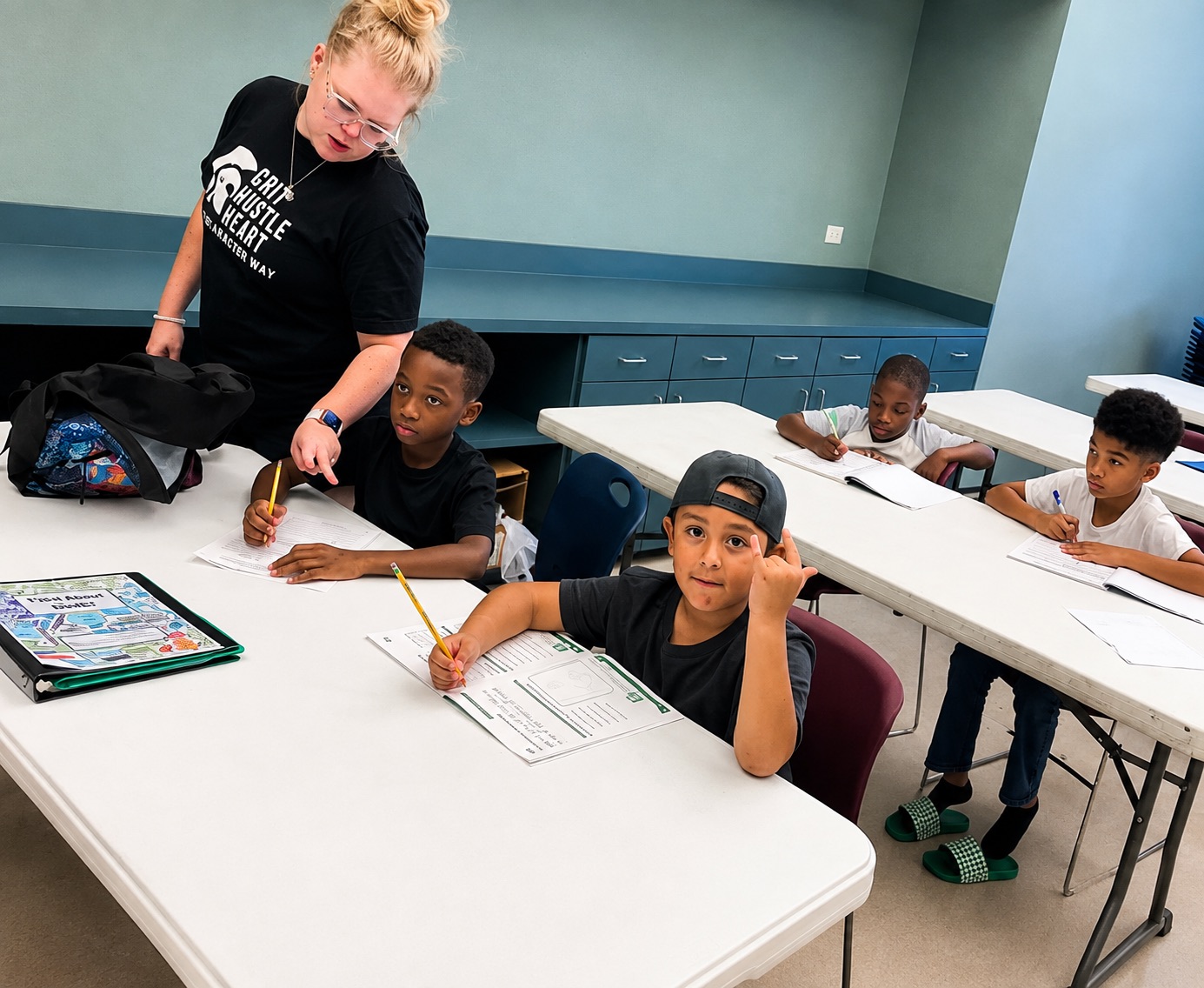
Support built around the K-5 basics that matter most.
Reading & phonics
Decoding, sight words, and reading comprehension built step by step.
Math foundations
Number sense, basic operations, and early fractions, taught concretely.
Homework & study habits
Routines for finishing homework independently and on time.
Confidence building
Small, visible wins that make a child want to keep trying.
What matters most changes fast between kindergarten and 5th grade.
Elementary tutoring isn't one-size-fits-all. We adjust the focus as a student moves through each stage.
Kindergarten - 2nd grade
Letter sounds, sight words, early reading fluency, and number sense through counting, comparing, and simple addition and subtraction.
3rd grade
A major shift from “learning to read” to “reading to learn,” plus multiplication, division, and multi-step word problems.
4th - 5th grade
Longer reading passages, paragraph writing, fractions and decimals, and the organizational habits that 6th grade will expect on day one.
You don't need a report card to know something's off.
Most families reach out well before a formal diagnosis or a failing grade. A few common signals are worth paying attention to.
Signs elementary tutoring could help
- ✓Reading feels like a struggle or gets avoided altogether
- ✓Homework that used to take 20 minutes now takes over an hour
- ✓Math worksheets come home with growing numbers of mistakes
- ✓Your child says they're “bad at” a subject
- ✓Report cards show a steady dip over two or more grading periods
- ✓Mornings before school involve real anxiety about a specific class
Why catching gaps early in elementary school pays off later.
Gaps compound otherwise
A shaky grasp of multiplication makes fractions harder, which makes algebra harder still.
Confidence is still forming
Kids build their sense of “am I good at school” largely in these years.
One-on-one pacing
No waiting for 25 classmates to catch up, and no falling behind quietly.
Real study habits, early
Routines built now make middle school homework far less of a fight.
Parents get visibility
Regular updates on what's actually happening, not just a report card twice a year.
A tutor who adjusts
Session focus shifts as your child's actual needs shift, not a fixed curriculum.
Ready to see where your child actually stands?
A free consultation is a conversation, not a sales pitch. We'll talk through what you're seeing at home and whether tutoring makes sense right now.
Frequently asked questions.
What parents of elementary-age kids ask us most before getting started.
There's no fixed age. Many families start as early as kindergarten or 1st grade if reading feels like a struggle, while others wait until a specific gap shows up in 3rd or 4th grade.
Sessions usually focus on reading and math first, since those are the foundation for every other subject, but we can include science or general homework help too.
Most elementary students do well with one to two sessions a week. More isn't always better at this age, consistency matters more than volume.
Both, depending on what works for your family and your student's age. Many younger students do especially well with in-person sessions.
That's completely normal and the most common case. Most elementary tutoring is about catching a specific gap early, not addressing a formal diagnosis.
We start with a short assessment to see exactly where your child is strong and where they need support, then build sessions around that, not a generic workbook.
Tell us about your student.
We'll follow up within one business day.